

Summer Has Arrived

As the days become warmer, the conditions inside our homes can begin to change too.

Summer is a useful time to notice indoor temperature, humidity, ventilation and the way moisture moves through the home.

A few simple observations can help you understand how your home is responding to warmer weather and where a little seasonal care may be useful.

Summer sun icon representing the Summer Healthy Home season

Around the home this summer

We’ll explore a few areas of the home throughout summer, one small step at a time.

Summer topicWhat we’ll explore
Summer HumidityNoticing whether your summer conditions are dry or humid
Opening the HomeChoosing when to open up by observing the air, weather and conditions outside
Cooling & AirflowAir conditioning, fans and how air moves through the home
Bathrooms & Wet AreasHelping moisture and wet surfaces dry effectively
Summer Moisture CluesWatching for condensation, dampness, musty smells and other changes

1. Notice your summer humidity

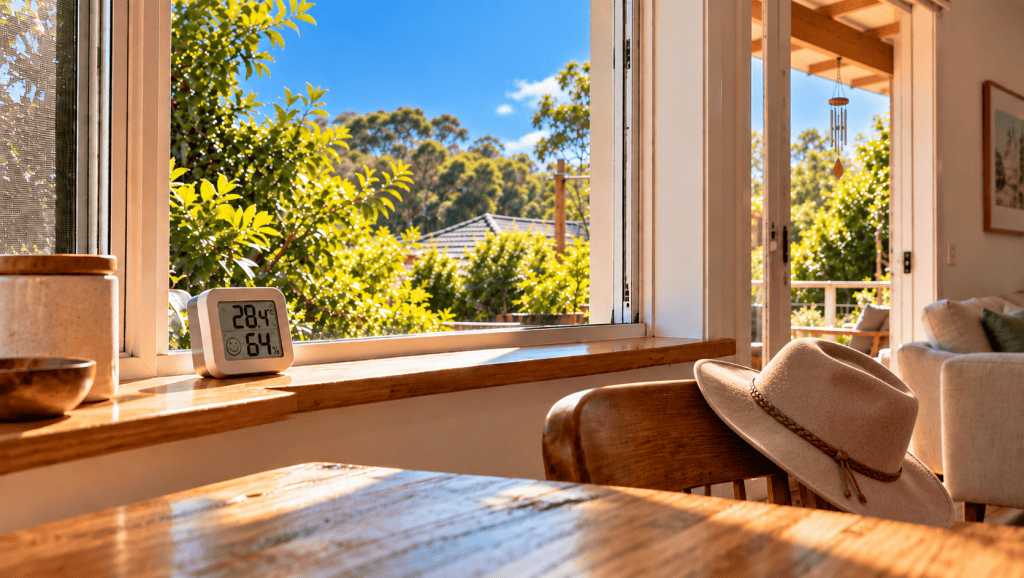
Open living space being observed during warm summer conditions

Summer can feel very different from one part of Australia to another. Some homes experience long periods of hot, dry weather, while coastal and northern areas may move through periods of warmer, more humid conditions.

Rather than assuming summer means either dry or humid air, take a look at what is actually happening inside your home.

A hygrometer can help you observe changes in relative humidity from day to day and from room to room. You may also notice how quickly things dry, how the bedroom feels overnight, or whether moisture and musty smells begin to linger.

Watch the weather and your home

Outdoor conditions can change quickly during summer. A hot, dry day may behave very differently from a warm, humid one. Notice what happens indoors as the weather changes, your home will often give you small clues about when moisture is beginning to linger.

2. Opening the home

Choose the right time to open up

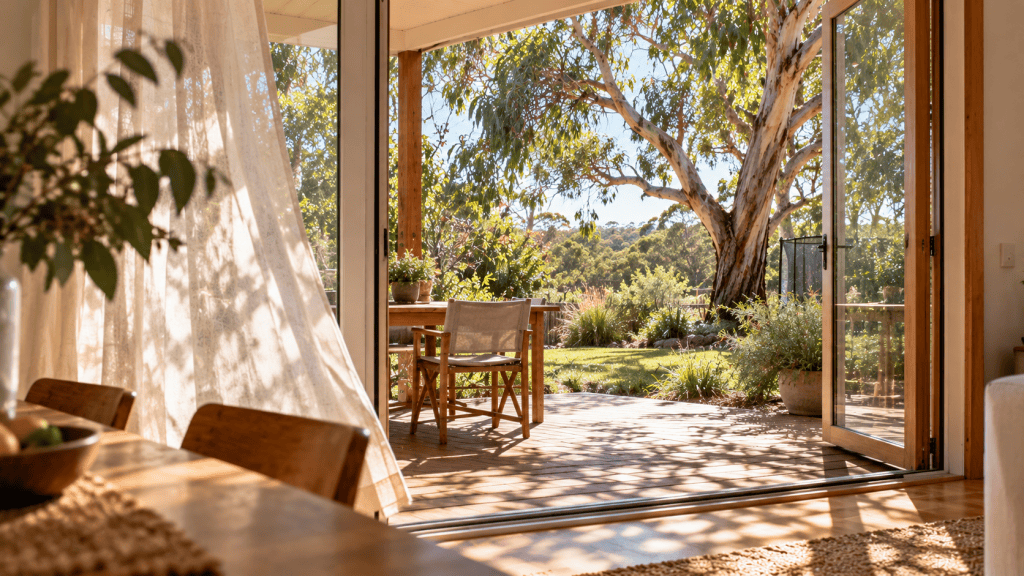
Open doors bringing fresh outdoor air into an Australian home

Summer often gives us opportunities to open windows and doors and let the outdoors become part of the home again.

But not every summer breeze brings the same conditions. Depending on where you live, the air outside may be hot and dry, warm and humid, beautifully cool, or affected by smoke, pollen or other outdoor conditions.

Before opening the home, take a moment to notice what is happening outside. Think about the temperature, humidity, wind direction and air quality and what that air may bring indoors.

Let the conditions guide you

On suitable days, opening windows and doors on different sides of the home can help create a pathway for air to move through.

At other times, keeping the home closed may make more sense. A hot breeze can add heat, humid outdoor air can add moisture, and during bushfire or smoke-affected conditions, outdoor air may be better kept outside.

Rather than following one rule throughout summer, allow the conditions around your home to guide when you open up and when you close things down.

Small summer note: Step outside before opening the house. Feel the air, notice the breeze and look at the conditions around you. What kind of air are you about to invite inside?
3. Cooling & airflow

Notice how you cool your home

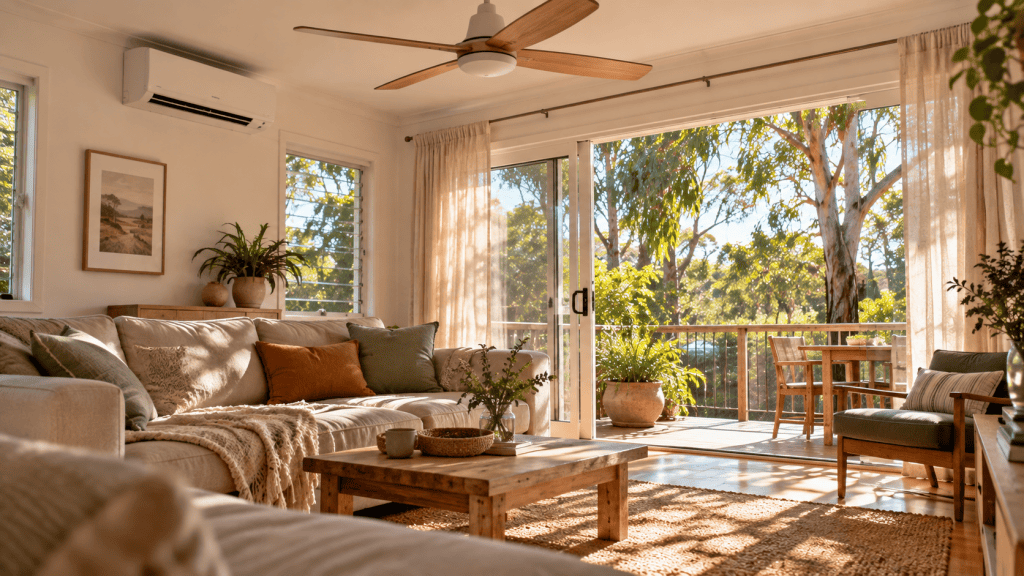
Ceiling fans and open windows supporting airflow through a summer living space

How we cool our homes during summer can vary with climate, location and the home itself. Some households make greater use of air conditioning, while others rely on ceiling fans, portable fans, shaded windows and natural airflow.

However we cool the home, it is useful to notice what happens to the indoor environment. A fan moves the air already in the room, while air conditioning cools, and depending on the system, may also remove some moisture, and yes, neither necessarily means fresh outdoor air is entering the home.

Think about how long windows and doors remain closed during hot weather, particularly when air conditioning is running.

Work with the home and the day

How warm a room becomes can also depend on its orientation and how much direct sun reaches it. In many east-coast Australian homes, south-facing rooms may remain cooler, while west-facing rooms can become much warmer as they receive the afternoon sun.

The design of the home matters too. Verandahs, eaves, awnings, external shading and breezeways can reduce direct summer sun and help air move through the home. These features become particularly important in hotter and more arid parts of Australia, where the relationship between shade, sun and airflow can be quite different.

The roof space is part of the picture too. Roof cavity ventilation, including roof vents or wind-driven ventilators such as whirlybirds, can help air move through the roof space and allow accumulated heat to escape. Their effectiveness depends on the roof design, the amount and location of ventilation, insulation and the conditions outside, so they are one part of the way a home manages summer heat rather than a cooling solution on their own.

You can also work with the changing conditions through the day. If one side of the home is cooler, opening there while keeping hotter, sun-exposed windows shaded or closed can help you make use of the cooler air. Later, as conditions change, you may change what you open and close.

Night can offer another opportunity. When outdoor temperatures fall below the temperature inside, opening the home can help release heat that has built up during the day. Clear skies can sometimes allow the land and buildings to lose heat more quickly overnight, and yes, as always, check the actual conditions outside rather than assuming the night air will be cooler.

Cooling and fresh air can work together

Choose suitable times to bring fresh outdoor air through the home, perhaps earlier in the day, later in the evening, or after a cooling change when the conditions outside are favourable.

On very hot, humid, smoky or poor-air-quality days, keeping the home closed may be the more appropriate choice.

The aim is not to follow one summer rule, but to understand the conditions outside, how you are cooling the home and whether fresh-air exchange is occurring.

Summer observation: Notice what happens when you switch off the cooling for a moment. Does the room feel fresh, still, humid or stuffy? Your senses can offer useful clues about the indoor environment.
4. Bathroom and wet areas

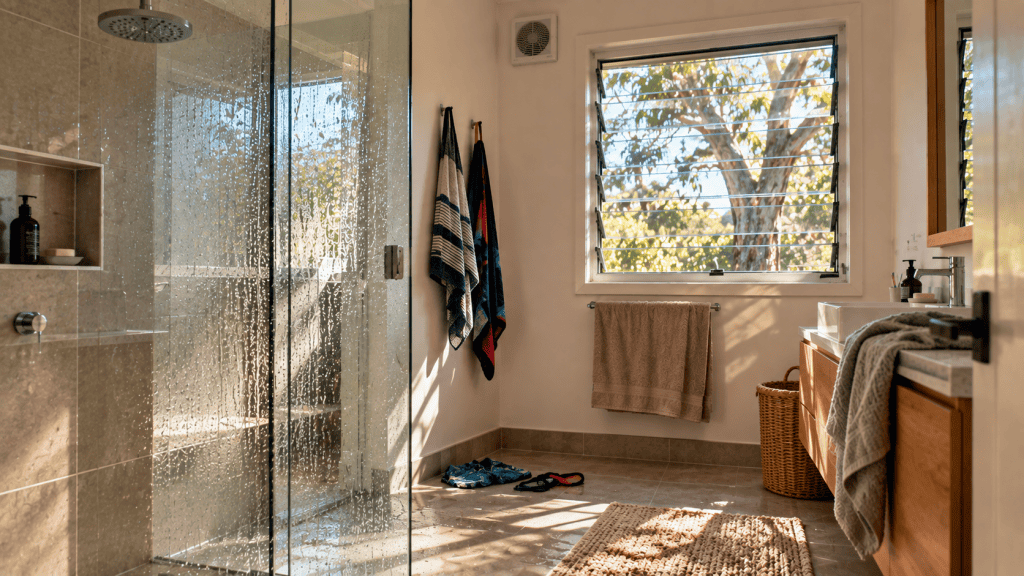
Bathroom with an open window supporting ventilation after bathing

Bathrooms naturally produce moisture throughout the year, but summer conditions can change how quickly that moisture leaves the room.

On a hot, dry day, towels and wet surfaces may dry quite quickly. During warmer, humid weather, the same bathroom can behave very differently where mirrors may stay misted for longer, towels can remain damp and moisture may linger on surfaces.

After showering, notice how long it takes for the room to clear and surfaces to dry. Look around the shower, bath, vanity, window and ceiling, and notice whether moisture is remaining in quieter corners such as the bathroom vanity.

Give moisture somewhere to go

Use your exhaust fan during showers and allow it to continue running afterwards so moisture has an opportunity to leave the room.

Where outdoor conditions are suitable, opening a window can assist with drying and air movement. Be thoughtful about opening the bathroom door into internal rooms, particularly where there is little cross-ventilation, as this may simply move warm, moisture-laden air from the bathroom into the adjoining part of the home.

Wet swimmers and towels are part of Australian summer too. Give them somewhere to dry well rather than leaving them damp in bathrooms, bedrooms, bags or piles of washing.

Summer observation: After the bathroom has been used, come back a little later and look again. Are the mirror, shower and towels drying, or is moisture still lingering?
5. Summer moisture clues

Notice the little signs around your home

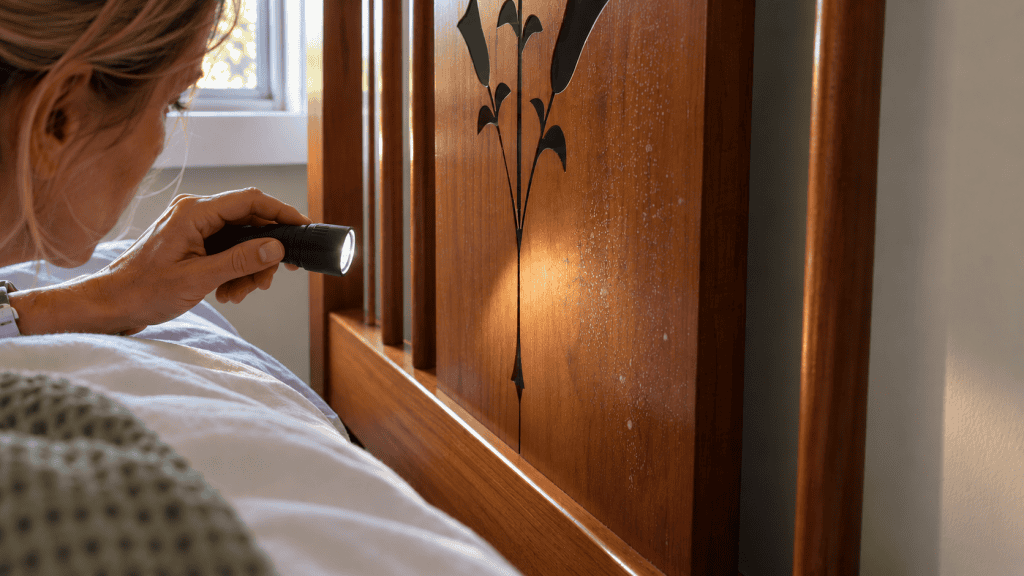
Checking for moisture clues using torch light

Moisture does not always announce itself with an obvious patch of mould. Often a home gives us smaller clues first.

During summer, notice whether certain rooms begin to smell different, surfaces take longer to dry, condensation appears in unexpected places, or cupboards, wardrobes and quieter corners begin to feel damp or musty.

Pay particular attention when the weather changes. A home that feels dry and comfortable through one part of summer may respond quite differently after several warm, humid or rainy days.

Look smell and feel

Walk through the home and use your senses. Look around windows and external walls, behind furniture and inside cupboards and wardrobes. Notice changes to paint, timber, fabrics and stored belongings.

Your hygrometer can add another piece to the picture. Rather than relying on a single reading, notice whether higher relative humidity is persisting and whether particular rooms behave differently from others.

Summer observation: Notice the change after several days of different weather. What has changed inside your home and where are you seeing, smelling or feeling it first?
6. Bushfire smoke & outdoor air

Know when to close the home

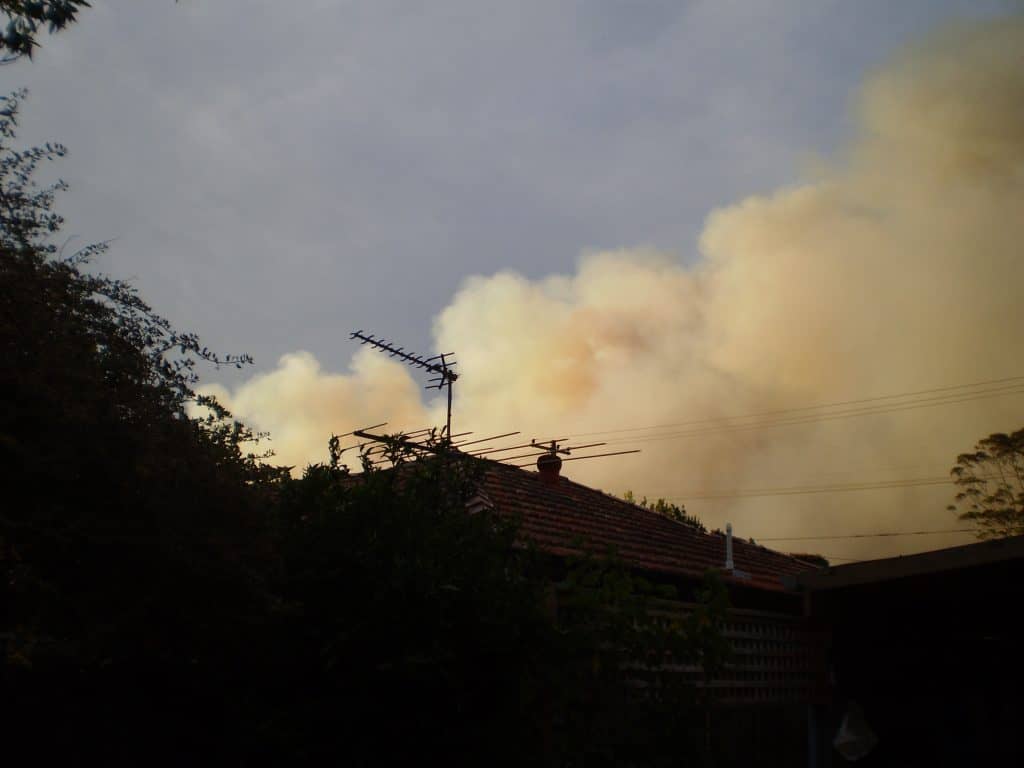
Bushfire smoke visible in the sky near an Australian home

Summer often draws us outdoors, open doors, BBQs, swimming, the beach and long evenings outside. But summer can also bring bushfire and smoke-affected days, sometimes even when the fire itself is a considerable distance away.

When smoke affects outdoor air quality, the way we manage the home needs to change. Rather than opening up for ventilation, closing windows and doors can help reduce the amount of smoky outdoor air entering the home.

Pay attention to what you can see and smell, and check local air-quality information and emergency advice when bushfire smoke is present. During smoke-affected conditions, keeping windows and doors closed can help reduce the amount of smoke entering the home. When the outdoor air clears, the home can be opened again to bring cleaner outdoor air through.

Create cleaner air indoors

If you use air conditioning during smoky conditions, take a moment to understand how your particular system operates. Where available, a recirculate setting can help avoid drawing smoky outdoor air inside. Evaporative cooling systems work differently because they draw outdoor air into the home.

If you already use an air purifier, this may be a time to put it to work. A correctly sized purifier with appropriate particle filtration can assist in reducing fine smoke particles indoors, particularly in a room that can be kept reasonably well sealed.

Then, when the smoke clears and outdoor air quality improves, that may be the time to open the home again and bring fresh air through.

Summer observation: Before automatically opening the windows, look outside, smell the air and check the conditions. Is today a day to welcome the outdoor air in or a day to keep it out?

One small step at a time

You do not need to respond to every summer change at once. Choose one area, notice what is happening, make one useful change and then move on to the next.

A healthier home grows from awareness of the little things we see along the way.

Continue through the seasons

Scroll to Top