Begin with the places where you spend the most time.
You may spend seven or eight hours in bed.
Perhaps another six or eight hours at a desk when working remotely or studying.
These spaces deserve a closer look — not because everything around us is necessarily a problem, but because time and proximity make them useful places to begin observing.
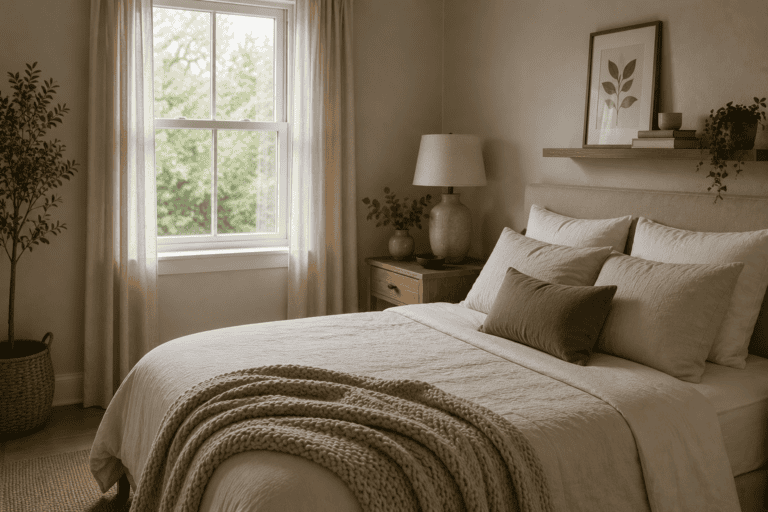
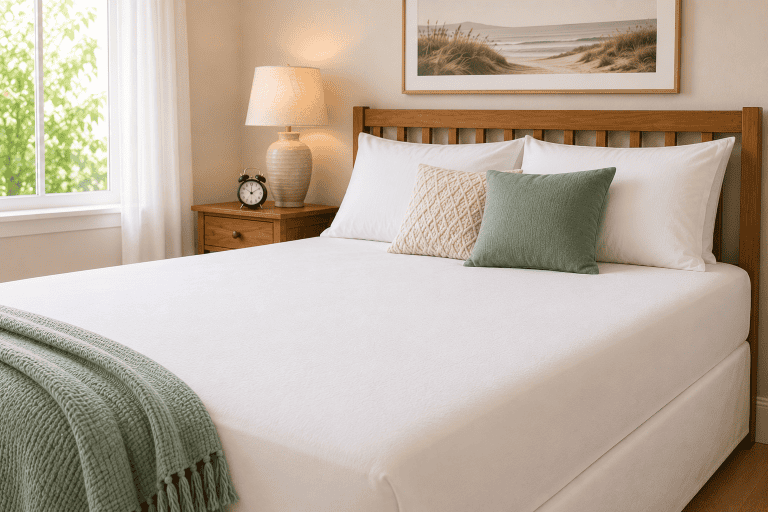
Stand beside your bed.
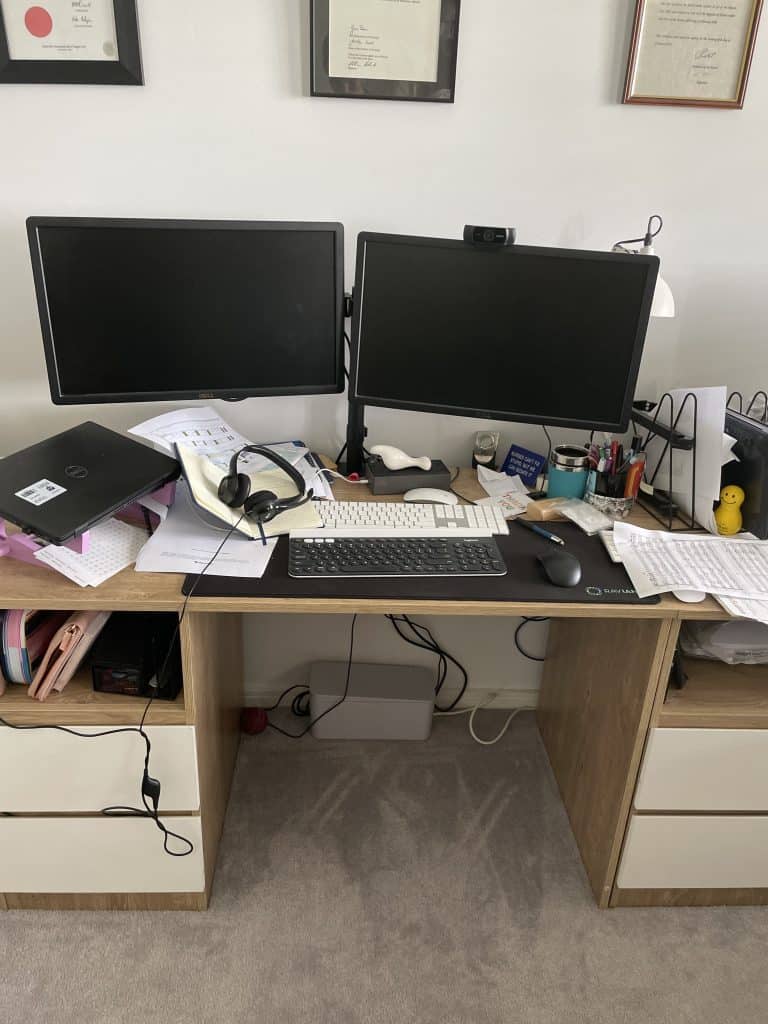
Sit at your desk.
And look around.
Begin beside the bed
What is on the bedside table?
Phone?
Tablet?
Smart watch?
Clock?
Lamp?
Charging cables?
Wireless speaker?
Baby monitor?
Electric blanket or electric bedding?
What is plugged into the wall?
Now look behind the bed.
Where are the power points?
Where do the cables run?
And importantly:
What is on the other side of the wall?
A refrigerator?
Television?
Electrical meter or switchboard?
Home office equipment?
Another bedroom?
For now, simply notice what is there. You are mapping what surrounds the place where you sleep.
Look at the rest of the sleep environment
A restful bedroom is about more than technology.
Notice:
light sound temperature air movement humidity clutter comfort darkness and the way the room feels at night.
Are there bright standby lights?
Does outside light enter through the window?
Can you hear equipment running?
Is the room too warm?
Does the air feel still?
Does anything interrupt the quiet rhythm of the space?
Rest begins with the environment around us.
Now sit at your desk
If you work or study from home, sit exactly where you normally sit.
Rather than looking from the doorway, sit exactly where you normally sit.
Sit in your chair.
What is within arm’s reach?
Computer.
Monitor.
Laptop.
Power board.
Chargers.
Router or Wi-Fi extender.
Printer.
Speakers.
Cordless phone.
Cables.
Smart devices.
Now look beneath the desk.
What has quietly accumulated there?
Ask questions
How many hours do I spend here?
What is close to my body?
What is plugged in?
What is wireless?
What remains operating when it isn’t being used?
What is behind or beneath me?
What is on the other side of the wall?
What could simply be moved further away?
What could be switched off when it isn’t required?
What needs to remain available?
And:
Does everything here need to be here?
Create a little space
Three simple things can help us think about our resting and working space:
Distance · Time · Choice
Distance
Where practical, creating distance between yourself and unnecessary equipment can be one simple consideration.
Time
Notice how long you spend beside particular devices or equipment.
Choice
Some things are essential.
Some are useful.
Some are simply habits.
Awareness gives you the opportunity to choose what belongs in your restful and working spaces.
Come back at night
This is important because a bedroom during the day isn’t necessarily the bedroom you experience at night.
Return after dark.
Turn the room lights off.
Listen.
Look.
Notice.
What glows?
What hums?
What remains connected?
What interrupts darkness or quiet?
What would make this space feel more restful?
Ready to widen the view?
You have looked closely at where you sleep and work.
Now let’s see how those spaces relate to the rest of your home.