
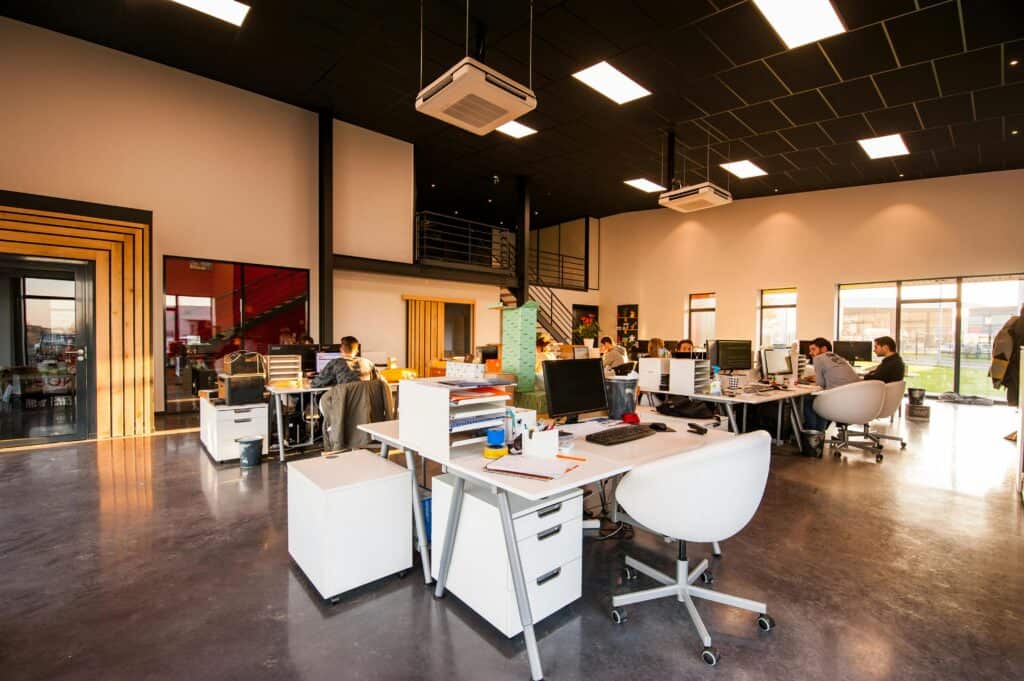
Is Your Office Affecting the Health of Your Employees?
When we think about workplace health and safety, we often think about obvious hazards. Slippery floors, manual handling, electrical safety and emergency procedures.
But what about the building itself?
Could something within your office environment be contributing to how your employees feel each day?
Most workplaces are busy places. People arrive, switch on their computers, settle into their routines and get on with their work.
Rarely do we stop to consider the air we’re breathing, the ventilation around us or what might be happening behind the walls, beneath the carpet or above the ceiling.
Yet these everyday surroundings deserve our attention.
When Staff Are Feeling Unwell
Perhaps you’ve noticed employees mentioning headaches, tiredness, irritated eyes or difficulty concentrating.
Maybe there are recurring complaints about stuffy rooms, unpleasant smells or air conditioning that never seems quite right.
These symptoms can have many causes, and they don’t automatically mean the building is responsible.
And yet, the workplace environment is one possibility worth exploring.
A useful place to begin is simply by asking questions.
- Do employees feel more comfortable away from the office?
- Are complaints coming from people working in the same area?
- Do symptoms appear at particular times of the day?
- Have there been any leaks, renovations or changes to ventilation?
- Are certain rooms noticeably warmer, colder or stuffier than others?
Patterns like these may provide clues worth investigating.
Your Office May Be Telling You Something
Buildings have a way of revealing their condition, often through small changes that are easily overlooked.
A faint musty smell after the weekend.
Condensation collecting around windows.
A discoloured ceiling tile.
Dust gathering around air vents.
A cupboard against an external wall that always seems damp.
Individually, these observations might not seem particularly important. Together, they may tell a larger story about the indoor environment.
And remember, not every indoor air quality concern comes with a noticeable smell or visible warning.
Take a Walk Through Your Workplace
You don’t need specialist equipment to begin observing your office.
Choose a quiet moment and walk through the building, looking at familiar spaces with fresh eyes.
1. Notice the Air
Does the office feel fresh or stuffy?
Are there areas where air movement seems limited?
Can windows be opened, or does the building rely entirely on mechanical ventilation?
Consider whether meeting rooms become uncomfortable when occupied by several people.
Understanding how air moves through indoor spaces can help you recognise where ventilation and fresh air exchange may need attention.
2. Look for Moisture
Check around windows, ceilings, walls and plumbing areas.
Look for water stains, peeling paint, swollen skirting boards or signs of previous leaks.
Pay attention to spaces behind furniture and inside cupboards, particularly those against external walls.
Moisture problems are not always visible on the surface.
Our guide to moisture and mould issues explores the early warning signs and how hidden dampness can develop within buildings.
3. Consider What’s Being Added to the Air
Everyday workplace activities can introduce pollutants into the indoor environment.
Cleaning products, fragrances, printers, furnishings, adhesives, flooring and renovation materials may release chemicals or particles.
Ask yourself whether particular smells appear after cleaning, deliveries or maintenance work.
4. Observe the Air Conditioning
When were the filters last inspected or replaced?
Are supply and return air vents clear?
Is there evidence of condensation, water damage or accumulated dust around the system?
Air conditioning and ventilation systems require appropriate maintenance to perform as intended.
5. Listen to Your Employees
Sometimes the people occupying the building provide the most useful observations.
Someone may have noticed an odour after rain.
Another may feel uncomfortable in a particular meeting room.
A third may have observed a recurring leak that was never fully investigated.
Encouraging staff to share their observations can help identify patterns that might otherwise go unnoticed.
Five Clues Worth Paying Attention To
As you become more familiar with your workplace, keep these five observations in mind.
- Recurring discomfort: Several employees mention similar symptoms or discomfort in particular areas.
- Moisture history: There have been leaks, flooding, condensation or previous mould problems.
- Unusual odours: Musty, chemical or stale smells appear at certain times.
- Poor airflow: Some rooms consistently feel stuffy or uncomfortable.
- Changes to the building: New furnishings, renovations, cleaning practices or equipment coincide with new complaints.
None of these observations proves that the building is causing illness. They are simply useful starting points for further investigation.
What Should You Do With Your Observations?
Begin by keeping a simple record.
Note what you’ve seen, where it occurs and whether it changes with the weather, occupancy or building activities.
Photograph visible moisture damage and record when it first appeared.
Review maintenance records, particularly those relating to water damage, plumbing and ventilation.
Talk with the people responsible for building maintenance and arrange appropriate repairs where needed.
If concerns persist, qualified building, ventilation or environmental professionals may be able to investigate further. Employees experiencing ongoing symptoms should also seek appropriate medical advice.
The important thing is to look for underlying causes rather than simply masking odours or repeatedly cleaning visible mould.
You may also find our Mitey Fresh Resources helpful, with practical guides and observation tools to support your understanding of indoor environments.
A Healthy Workplace Begins With Awareness
At Mitey Fresh Building Biology, we’ve spent decades encouraging people to become more aware of the buildings they occupy.
A workplace doesn’t have to look dirty or neglected to have indoor environmental concerns.
And not every headache, cough or tired employee points to a building problem.
The value lies in learning to observe, asking questions and recognising when something deserves closer attention.
You may discover that your office needs better ventilation, improved maintenance, moisture repairs or simply a change in everyday practices.
The first step isn’t necessarily bringing in an expert. It’s taking the time to look around.
Because when we understand our buildings a little better, we can make more informed choices about the places where we spend so much of our lives.
If you have quality air in your place, you will breathe quality air ~ Mitey Fresh.
References & Further Reading
- Safe Work Australia – Managing the Work Environment and Facilities
Australian workplace guidance covering ventilation, air quality, temperature, humidity and employee comfort.
https://www.safeworkaustralia.gov.au/system/files/documents/1702/managing_work_environment_and_facilities2.pdf - Australian Government, enHealth – Potential Health Effects of Mould in the Environment (2022)
Guidance on moisture, mould exposure, potential health effects and the importance of addressing underlying moisture problems.
https://www.health.gov.au/sites/default/files/documents/2022/07/enhealth-guidance-potential-health-effects-of-mould-in-the-environment.pdf - World Health Organization – WHO Guidelines for Indoor Air Quality: Dampness and Mould (2009)
Scientific review of building dampness, microbial growth, respiratory health and moisture prevention.
https://www.who.int/publications-detail-redirect/9789289041683 - United States Environmental Protection Agency – An Office Building Occupant’s Guide to Indoor Air Quality
Practical guidance for employees, employers and building managers on recognising and addressing indoor air quality concerns.
https://www.epa.gov/indoor-air-quality-iaq/office-building-occupants-guide-indoor-air-quality - United States Environmental Protection Agency – Do You Suspect Your Office Has an Indoor Air Problem?
Explains how workplace observations, occupant feedback and building investigations can help identify possible indoor environmental concerns.
https://www.epa.gov/indoor-air-quality-iaq/do-you-suspect-your-office-has-indoor-air-problem
